The 2-second test: how to tell if a game has good feel
You don't need to be a game designer to spot the difference between a polished game and a lifeless one. Here's a simple test that works every time.
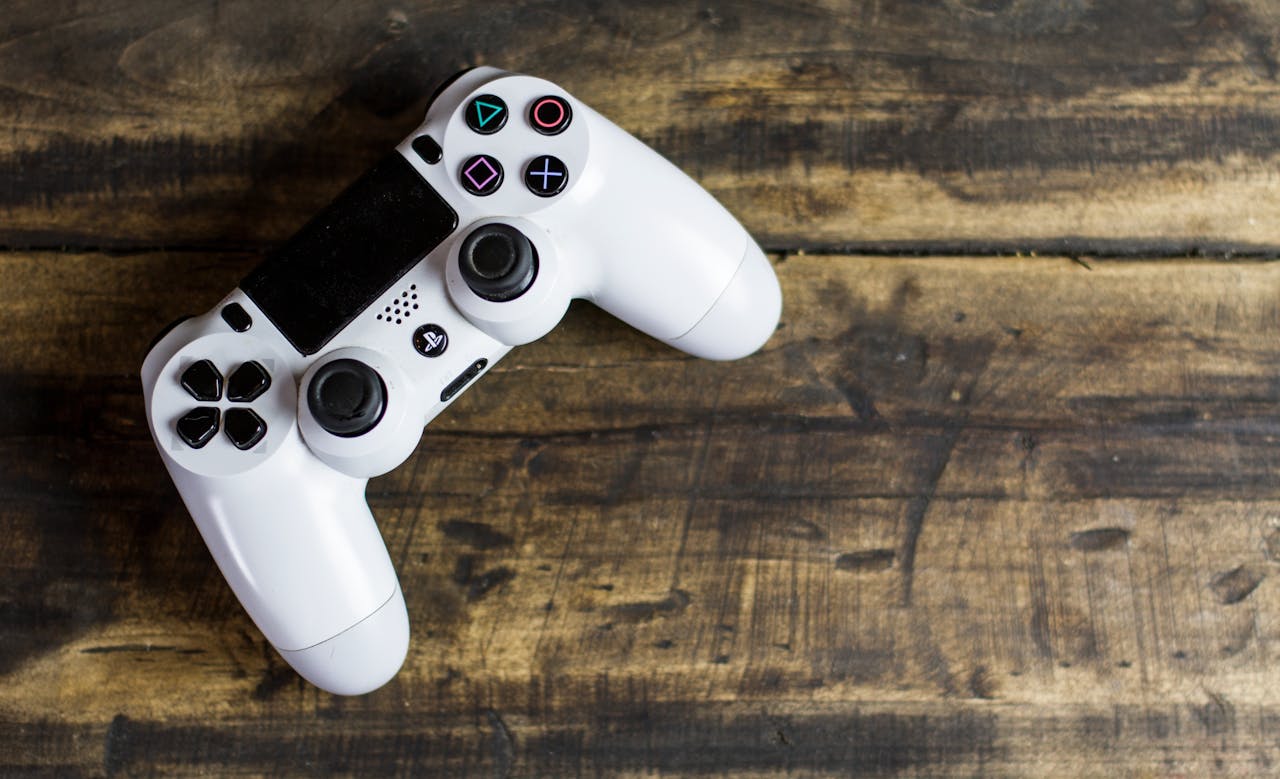
Here's a test you can run on any game, anywhere, in about two seconds.
Pick it up. Do the simplest possible action. Move a character. Tap a button. Make something jump.
You already know. Before you've seen a single enemy, before you've read a word of dialogue, before the tutorial has even started -- you already know if this game has good feel.
Two seconds. That's all it takes.
Why two seconds is enough
Your brain is running an impossibly fast audit. You're not aware of it, but in that tiny window, your nervous system is processing dozens of micro-signals simultaneously.
Response time. Did the character move the instant you touched the stick? Or was there a faint, sickly delay -- 80 milliseconds of nothing that made the whole thing feel like you were controlling a puppet through mud?
Animation. Did the movement have weight? Did the character accelerate and decelerate like a physical object, or did it slide across the screen like a chess piece being dragged on a touchscreen?
Sound. Was there audio feedback? A footstep, a whoosh, a subtle thud? Or dead silence -- the character gliding through the world like a ghost?
Camera. Did the viewport respond to your movement? Did it lead slightly in the direction you were heading, or did it sit there, static, like a security camera bolted to a wall?
You're not consciously checking any of this. You don't have a clipboard. You're not scoring each category out of ten. But your brain is doing all of it at once, in parallel, at a speed you can't override.
And the verdict arrives as a feeling. Not a thought. A feeling.
That feeling is either "this is good" or "something is wrong."
What "good" feels like
Two seconds into a game with good feel, your hands relax.
The character responds instantly. Not just fast -- instantly. The gap between your intention and the action on screen is so small that it vanishes. The character becomes an extension of your thumb.
The movement has personality. Maybe the character is heavy and deliberate, like in Dark Souls. Maybe they're fast and twitchy, like in Celeste. Either way, the movement communicates something. It tells you what kind of game this is before a single word of text appears.
There's sound. Not just any sound -- the right sound at the right moment. A landing thud that matches the visual impact. A jump sound that fires on the exact frame your feet leave the ground. Audio and visuals locked together so tightly that separating them would feel like pulling apart magnets.
The camera breathes. It shifts ahead of your movement. It settles when you stop. It's alive in a way you never consciously notice, but your spatial awareness absolutely depends on.
Two seconds of this, and your brain says: keep going.
What "bad" feels like
Two seconds into a game with bad feel, your hands tense up.
There's a delay. Tiny, maybe 50-100 milliseconds. But your nervous system catches it immediately. The character doesn't feel like an extension of you. It feels like a thing you're issuing orders to. There's a gap between your brain and the screen, and that gap creates a subtle, persistent discomfort.
The animation is either too stiff or too floaty. The character moves at a constant speed -- no acceleration, no deceleration, no weight. It looks like a sprite being translated across coordinates, because that's exactly what it is. Nothing about the movement suggests a physical body in a physical space.
Sound is missing, or wrong. The jump has no audio cue. The landing is silent. Or worse -- there's a sound, but it's a generic click that arrives two frames late. Your ears and your eyes disagree about what just happened, and that disagreement registers as cheapness.
The camera is static. You move, and the camera follows with a hard, mechanical lock. No lead, no ease, no anticipation. It feels like watching the game through a window instead of being inside it.
Two seconds. That's all your brain needed. Verdict: something is off. And here's the brutal part -- most players won't push past that verdict. They won't give the game five more minutes to see if it gets better. They'll just leave.
The vibe-coded game vs. the polished indie
This is where the two-second test gets interesting.
Take a game built with a typical AI code generator -- the kind where you describe what you want and the AI writes the code. The game works. The character moves. The platforms are there. The coins are collectable. Functionally, everything is correct.
Now do the two-second test.
Move the character. It slides. There's no acceleration curve, no squash-and-stretch on landing, no screen shake on impact. The jump sound is a default beep. The camera tracks the player with a hard linear follow. Everything is technically right and completely lifeless.
Now pick up a polished indie. Something like Celeste, Hollow Knight, or Dead Cells. Do the exact same test.
The difference is so vast it's almost violent. The polished game has weight, snap, rhythm, responsiveness. The vibe-coded game has none of it. And the gap between them isn't about the big things -- the art, the level design, the story. It's about the hundred tiny decisions that happen in the first two seconds of input.
Input buffering. Coyote time. Hit-stop. Audio pitch variation. Camera anticipation. Easing curves on every transition. These are the things that separate a game that feels good from a game that feels like a homework assignment.
The implication for anyone making games
If players judge your game in two seconds, then those two seconds are where the majority of your effort should go.
Not the third level. Not the boss fight. Not the skill tree. The first input.
How does it feel to move? How does it feel to jump? How does it feel to tap the screen and watch something happen? If the answer is "fine, I guess," you've already lost. "Fine" is not a feeling that makes people keep playing. "Fine" is what they feel right before they open a different app.
This is counterintuitive. It feels like the content of your game -- the levels, the enemies, the progression systems -- should matter most. And those things do matter. But they only matter if the player sticks around long enough to experience them. And whether they stick around is decided in two seconds by a part of their brain they don't consciously control.
The good news: making a game feel good isn't about having a bigger budget or a bigger team. It's about knowing which details matter and executing them precisely. It's about input buffering and coyote time and screen shake calibration and a dozen other small, specific, learnable techniques.
The bad news: implementing those techniques by hand is slow, painstaking work. It's the kind of work that gets cut when deadlines get tight, which is why so many games ship feeling "fine" instead of feeling great.
Where this is headed
We built Exekite around a simple conviction: game feel shouldn't be optional, and it shouldn't be hard. When the invisible details -- the ones your players' brains are auditing in those critical first two seconds -- are built into the foundation from the start, every game gets to start from "this feels great" instead of "this technically works."
Because technically working was never the bar. The bar is two seconds and a feeling. And that feeling is everything.
Keep reading
7 invisible details that make games addictive
The best games don't feel good by accident. Here are seven design details you've never consciously noticed — but your brain absolutely has.
Why most vibe-coded games feel terrible (and how to fix it)
Vibe coding can produce a working game in minutes. But 'working' and 'worth playing' are two very different things. Here's what's going wrong — and what it takes to fix it.
What is game feel, and why does it matter?
The invisible details that separate games you can't put down from games you close after 30 seconds. A non-technical guide to the most important concept in game design.